
You know that Thursday night feeling: the fridge holds half an onion, a single carrot, a neglected bell pepper, and a wedge of Parmesan that's mostly rind. The pantry offers a box of Arborio rice that's been sitting there since winter. Your toddler is tugging at your jeans, and the clock says 5:45 p.m. That is exactly the moment ragtag risotto was invented — the flexible, forgiving, surprisingly elegant dinner that asks only that you show up with whatever you've got.
Risotto has a reputation for being fussy, perpetually stirred, and demanding. But that reputation comes from restaurant kitchens where precision matters for plating. In real family homes, risotto is one of the most forgiving dishes you can make. The starches in the rice will bind almost any odd vegetables, bits of leftover meat, or even last night's roasted vegetables into a creamy, satisfying meal. And you don't have to stir constantly — a gentle stir every minute or so is plenty, especially if you leave the heat low and the lid partially on.

What Makes a Ragtag Risotto Work?
The magic is in the technique, not the ingredient list. Instead of hunting for a recipe that demands exactly 200 grams of mushrooms and a cup of dry white wine, you can treat risotto as a framework. Here's the basic structure:
- Aromatic base: Whatever alliums you have — onion, shallot, leek greens, even a bit of garlic. Sauté them in butter or oil.
- Rice: Arborio, carnaroli, or vialone nano are ideal because they release starch slowly. If you only have long-grain, it will still work, just with less creaminess.
- Liquid: Any broth (chicken, vegetable, even water with a bouillon cube). You need about 3 parts liquid to 1 part rice by volume. If you have wine (white or even a splash of red), add it after toasting the rice; if not, skip it.
- Leftover bits: Cooked vegetables, raw vegetables chopped small, leftover chicken, bits of bacon, sausage, cheese rinds, wilted herbs. Add hard vegetables early, soft vegetables late.
- Finishing fat: Butter, cream cheese, or a thick yogurt stirred in at the end along with grated Parmesan (or any hard cheese you have).
Notice the absence of exact measurements. That is deliberate. The only non-negotiable piece is that you keep the liquid hot before adding it to the rice, and that you taste as you go. Everything else bends.
Why This Method Works for Parents
Weeknight dinners with young children are less about gastronomic ambition and more about getting something warm and filling on the table before the hangry meltdown. Ragtag risotto fits that need perfectly. It cooks in about 20 minutes from the first stir to the plate. You can prep while the rice simmers — the rice itself only needs attention once a minute or so. That leaves time to respond to a sibling squabble, pour a cup of milk, or simply stand still and breathe.
I remember a particular Tuesday when we had exactly half a zucchini, three wilted mushrooms, and the heels of a loaf of sourdough that I turned into breadcrumbs. I crisped the breadcrumbs in a pan while my partner put the baby down, and then we ate the risotto with a crunchy topping that made it feel like a treat. That meal cost almost nothing, used things that would have been thrown out, and took less time than ordering pizza would have taken.
If you have a child who is old enough to help, risotto is a great low-risk cooking project. They can pour in the rice (measure it first), stir with a long wooden spoon under supervision, or pick which leftover vegetables to add. Mess is expected, and the inevitable splatters on the stove are easily wiped. For a deeper dive into embracing imperfection in family meals, you might enjoy the gentle reminder that your baby's messy high chair beats any perfect Instagram photo — same principle applies: let go of the picture and focus on the real moment.
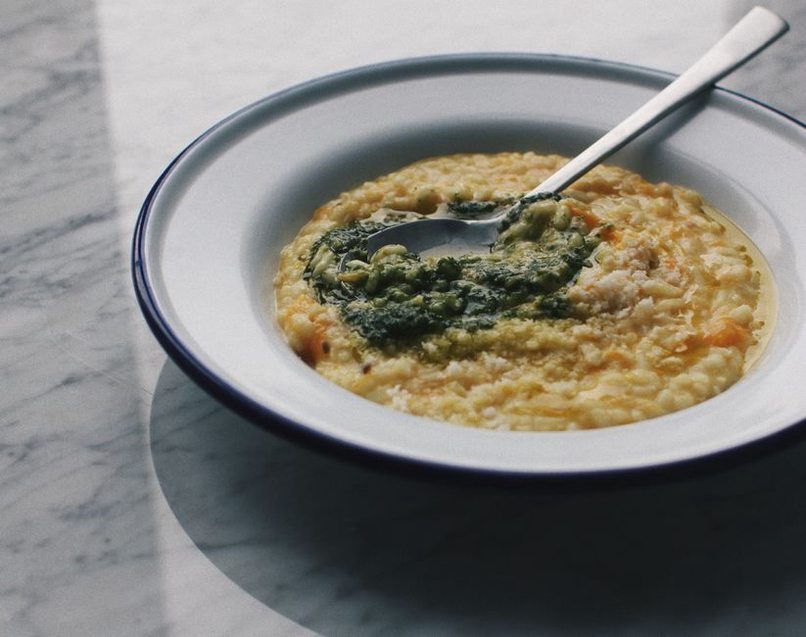
Seven Ragtag Risotto Combos to Try
Once you internalize the framework, you can riff endlessly. Here are combinations that have worked in our kitchen, all using odds and ends:
| Leftover / Pantry Item | Flavor Direction | Add Extra |
|---|---|---|
| Roasted carrots + orange zest | Bright, sweet | Parmesan, splash of orange juice |
| Wilted spinach + feta | Greek-ish | Garlic, dill (dried is fine) |
| Sausage (cooked) + bell pepper | Hearty | Smoked paprika, tomato paste |
| Butternut squash (cubed) + sage | Fall | Brown butter, nutmeg |
| Cherry tomatoes (roasted) + basil | Simple summer | Basil, balsamic vinegar at the end |
| Lemon + leftover roast chicken | Comfort | Thyme, lemon zest, Parm |
| Mushrooms + thyme + splash of white wine (if open) | Classic | Garlic, parsley, truffle oil if you have it |
Notice that none of these require a trip to the store. The point is to use what you already have. If you have no Parmesan, a spoonful of cream cheese or even a handful of shredded mozzarella can mimic the creaminess. If you have no vegetables, a simple butter and Parmesan risotto is a classic on its own.
The One Detail That Saves the Meal
There is one step that can make or break a ragtag risotto, especially when the ingredients are odds and ends: you must season throughout, not just at the end. Salt the aromatics, salt the rice when it toasts, and taste the liquid before adding it. Many home cooks under-salt early, then over-salt at the table. A well-seasoned risotto needs almost nothing at the table — just maybe a grating of cheese.
Another small but powerful habit: reserve a little of the cooking liquid before the final stir. If the risotto sits even for a minute before serving, it will thicken. A splash of hot broth or water brought back to the stove will loosen it to the perfect consistency. This trick alone has saved many dinners that threatened to become a sticky block.
When Chaos Strikes (Because It Will)
Sometimes the risotto will turn out too runny, or the rice will be crunchy because the heat was too high and the liquid boiled away too fast. That is fine. If it's crunchy, add another ladle of hot broth and let it simmer covered for a few minutes. If it's soupy, turn up the heat and stir vigorously for a minute — the extra liquid evaporates faster than you'd think. And if it's still not perfect? Spoon it into bowls, call it "creamy rice soup" or "casserole-style risotto," and move on. The kids will eat it because it's warm and salty, and you will eat it because you made it, and that counts.
This flexible approach to cooking is part of a larger mindset: letting go of perfection and embracing what works. In our family, we've found that the meals we remember longest are not the ones that followed a recipe to the gram, but the ones we cobbled together when the fridge was almost empty and everyone was hungry. That evening when the baby threw a handful of cooked rice across the kitchen, and we laughed, and scraped it back into the pot because, well, five-second rule? That is the meal I still talk about.
So the next time you open the fridge and see a ragtag collection of bits, don't reach for the takeout menu. Reach for the rice. Add a little courage, a lot of simmering, and accept that some nights the risotto will be perfect and some nights it will need a bit of broth to become edible again. Either way, you fed your people with what you had. That's the whole point.